



Inside A Chinese Gym Equipment Factory: How Commercial Treadmills Are Actually Made
You've seen the price gap between European brands and Chinese-made treadmills. The difference can be 40-60% for comparable specs. But what are you actually getting inside that welded frame? Let's walk through the manufacturing process so you know exactly what to look for when you're sourcing.
Frame Construction: Where The Real Cost Difference Lives
Commercial treadmill frames use 2.0mm to 3.0mm thick structural steel tubing. Cheap factories skimp here, using 1.5mm or lower. You'll feel it in machine wobble after 6 months of heavy use.
A quality Chinese factory like MBH uses robotic MIG welding for consistent penetration. Weld points are ground smooth and powder coated at 200 microns minimum thickness. Ask for the steel gauge spec sheet before you order.
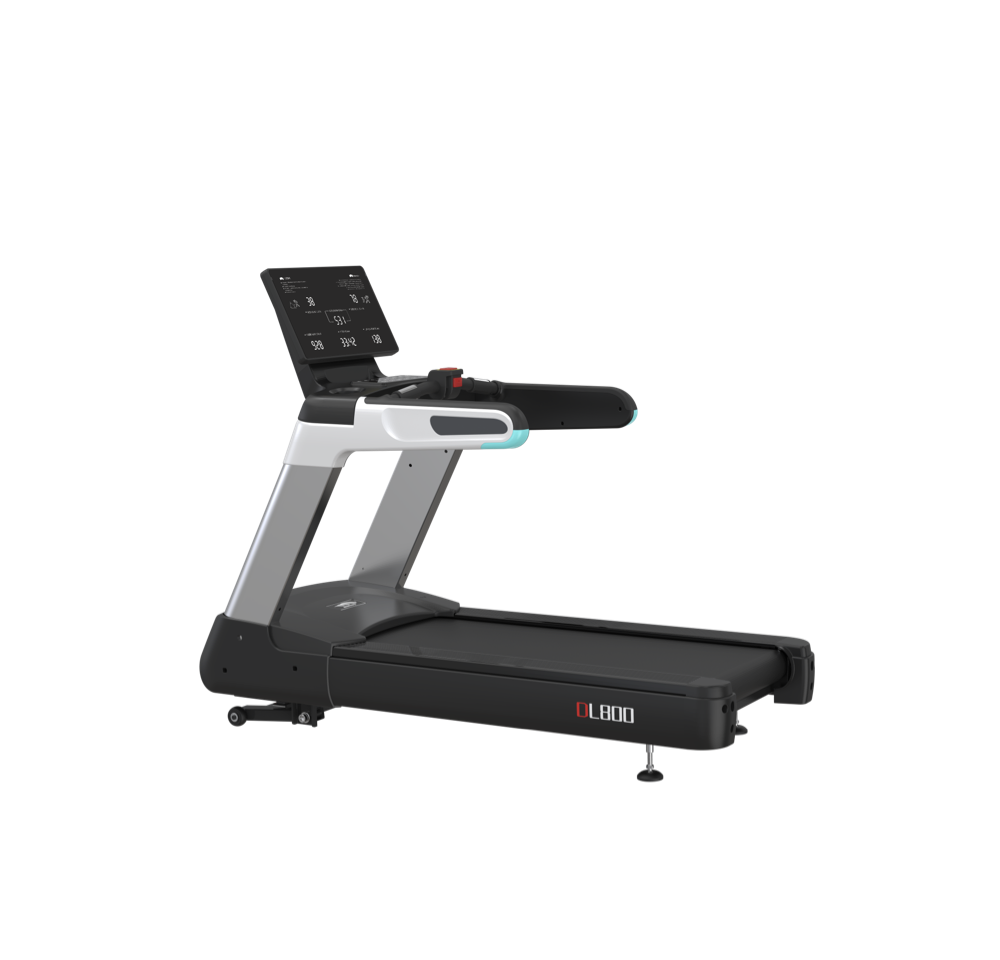
The DL800 Commercial Treadmill
Motor Systems: DC vs AC Drive
DC Motors (The Budget Standard)
Most Chinese factories use DC motors rated at 3.0-5.0 HP continuous duty. The actual sustained output is typically 1.5-2.5 HP. Don't get fooled by peak HP ratings. Insist on continuous duty specs.
Brush wear is the main failure point. A quality DC motor should deliver 8,000-10,000 hours before brush replacement. Anything below 6,000 hours means you're buying cheap copper windings.
AC Motors (The Commercial Upgrade)
AC induction motors are brushless and run cooler. They cost 30-40% more but deliver 15,000-20,000 service hours. For high-traffic gyms with 12+ hours daily use, AC is the smarter investment.
The M005-TFT Commercial Treadmill

Running Decks and Belts
Two-layer phenolic resin boards are the commercial standard. Thickness matters: 18mm minimum, 25mm for premium. Chinese factories typically use 18-20mm, which is adequate for light commercial (under 6 hours daily).
Belt quality is where you see the most variation. Cheap belts use recycled rubber and delaminate within 18 months. Quality belts use virgin rubber with a woven polyester layer. Request a belt sample during factory visits.
The M005-LED Commercial Treadmill

Shock Absorption Systems
Six to eight elastomer shock absorbers is the minimum for commercial use. The best designs use replaceable rubber dampers rather than foam inserts. Foam degrades in 12-18 months. Rubber lasts 4-5 years.
Test the deck compression during your factory visit. A 10% - 15% compression ratio at the impact zone is ideal. More than that and the machine feels mushy. Less and it's too hard for joint safety.
Electronics and Console Reliability
The console is the most failure-prone component. Chinese factories source screens from three main suppliers: BOE, AUO, and Innolux. All are Tier 1 panel makers.
What matters more than the screen brand is the controller board. Cheap boards use off-the-shelf Arduino clones. Quality boards use custom-designed PCBs with dedicated motor controllers and EMI shielding.
The M9900 Commercial Treadmill features a sealed console housing rated to IP54. That means dust and sweat won't kill the electronics in year two.
Testing Before Shipment
Reputable Chinese factories run a 4-hour continuous burn-in test on every unit. They check motor temperature, belt tracking, console function, and noise levels. Noise readings under 70dB at 12 km/h are acceptable for commercial use.
Ask about their quality rejection rate. Factories with under 2% rejection rate have solid processes. Rates above 5% mean you'll deal with warranty claims.
How Chinese Manufacturing Compares To European And American
European and American brands still lead in three areas: advanced console programming, premium materials (thicker steel, higher-grade bearings), and longer warranty terms. You pay 50-80% more for these advantages.
Chinese manufacturing has closed the gap significantly in the last 5 years. MBH's 380,000+ square meter facility uses automated welding lines, conveyor assembly, and in-house powder coating. That's on par with any European factory.
What To Look For When Buying Direct From China
- Request continuous motor HP (not peak), deck thickness, and belt construction specs in writing
- Ask for ASTM or EN certification documentation
- Get a sample unit shipped for evalsuation before placing bulk orders
- Check warranty terms: 2-3 years on frame, 1-2 years on electronics is standard
- Visit the factory if your order exceeds $50,000
- Confirm payment terms: 30% deposit, 70% before shipment is typical
Factory Capabilities That Matter
Look for factories with in-house R&D, not just OEM assemblers. MBH develops its own strength machines like the MEL-001Chest Press, MEL-002 Pec Fly, and MEL-012 Lat Pull Down. That engineering expertise transfers directly into their treadmill production.
A factory that only assembles bought-in components can't fix design issues. One that engineers its own products can iterate and improve continuously.
MBH's facility covers cardioses, selectorized strength, plate loaded, and free weight benches. The M-7808R Upright Bike and M-8809EL Elliptical share the same quality standards as their treadmills.
Final Recommendations
For budget-conscious buyers, Chinese-made treadmills offer solid value if you source from factories with proper quality systems. The sweet spot is in the mid-range commercial segment.
Stick with factories that document their testing processes, use name-brand components for motors and electronics, and offer transparent warranty terms. Skip any supplier that can't provide a detailed spec sheet in writing.
A direct-from-factory treadmill like the M9900 Commercial Treadmill or M005-LED Commercial Treadmill can deliver 5-7 years of commercial service at 40-50% less than established brand pricing. The savings come from eliminating distributor margins, not from cutting corners on materials.
Visit the factory. Test the equipment. Get everything in writing. The Chinese manufacturing sector has matured. You just need to know what you're looking at.
