



Endurance Strength Training: A Strategic Addition for Gym Operators and Hotel Fitness Managers
Endurance strength training—the ability to perform repeated muscular contractions against moderate resistance for extended periods—is often overlooked in commercial fitness facilities. While heavy strength and hypertrophy programming dominate many gym floors, endurance strength offers a unique value proposition: it attracts a broader demographic, reduces injury risk, and creates a training style that complements cardio and traditional resistance work. For gym operators and hotel fitness managers, incorporating dedicated endurance strength zones or classes can boost member satisfaction, retention, and even equipment utilization. In this article, we’ll explore what endurance strength training is, why it matters for your facility, and how to implement it effectively with the right equipment and programming.
What Is Endurance Strength Training?
Endurance strength, also called muscular endurance, is the ability of a muscle or muscle group to sustain repeated contractions against a submaximal load. Typical protocols involve 15-25 reps per set, short rest periods (30-60 seconds), and loads around 40-60% of one-rep max. This training improves cardiovascular fitness, metabolic conditioning, and neuromuscular efficiency without the high joint stress of heavy lifting. It’s especially appealing to older adults, rehabilitation clients, and those seeking functional fitness or weight loss.
The Business Case for Endurance Strength
Commercial gyms often segment members: powerlifters, bodybuilders, cardio enthusiasts, and general fitness seekers. Endurance strength bridges the gap between cardio and heavy strength, offering a middle ground. By adding a dedicated endurance circuit or program, you:
- Attract members intimidated by heavy free weights
- Appeal to hotel guests wanting a quick, full-body workout without learning complex lifts
- Increase equipment turnover during peak hours (shorter rest = higher throughput)
- Reduce injury liability (lower loads, controlled movements)
Hotels, in particular, benefit from offering space-efficient endurance stations that require minimal supervision. Gym operators can upsell endurance-focused classes or small-group training sessions.
Key Equipment Considerations
Not all strength equipment is ideal for endurance training. You need machines that allow quick weight changes, smooth resistance curves, and comfortable body positioning for high reps. Here are two categories that work exceptionally well.
Selectorized Machines for Smooth, Safe High-Rep Work
Selectorized strength machines are perfect for endurance training because changing weight is effortless—just slide the pin. Machines like the LAS-01 Chest Press offer a guided motion that reduces stabilization demands, letting members focus on rep quality. The LAS-04 Low RoW and LAS-11 Seated Leg Extension are similarly user-friendly. For full-body circuits, consider the LAS-12 Triceps Press and LAS-06 Row. The smooth cam systems maintain resistance through the range of motion, preventing momentum from reducing muscle tension—critical for endurance adaptations.
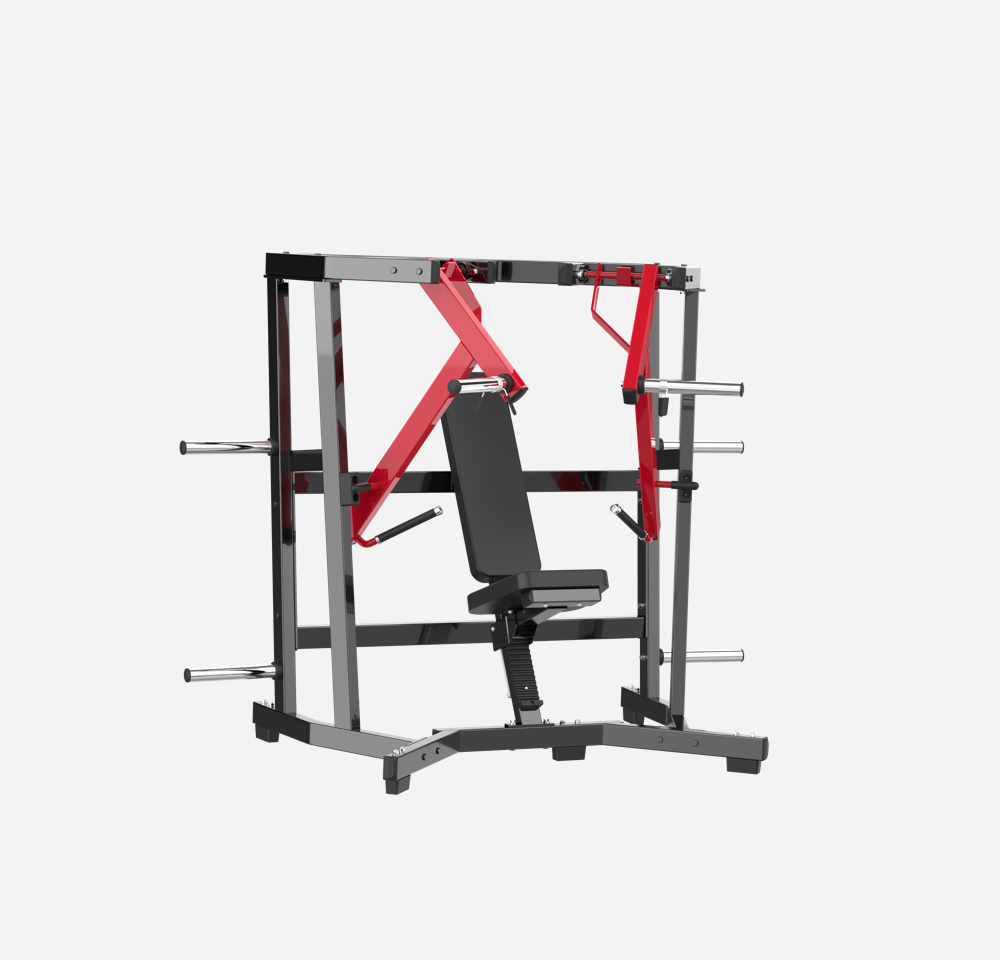
Plate-Loaded Machines for Variable Resistance
Plate-loaded equipment offers a different feel: the resistance curve can be designed to match the body’s natural strength curve, increasing time under tension. The MET1-08 Iso-Lateral Bench Press and MET1-25 Iso-Lateral Leg Extension allow independent limb movement, which helps correct imbalances and keeps muscles working evenly—important when fatigue sets in during high-rep sets. For back and Biceps, the MET1-14 Plate Loaded iso-Lateral Row and MET1-38 Lat Pulldown Circular provide stable platforms for sustained effort. These machines are also durable enough for high-frequency use in busy commercial settings.

Programming Tips for Operators
To maximize the value of endurance strength training in your facility, consider these programming approaches:
Circuit Training Stations
Set up a 6-8 machine circuit with alternating upper/lower body. Each station: 20 reps, rest only during transition (15-30 seconds). Members complete 2-3 rounds. This boosts heart rate and metabolic burn. For example, pair the LAS-06 Row (back) with the LAS-09 Leg Press, then move to the LAS-01 Chest Press. End with core work on a stability ball or mat. Hotels can offer this as a 20-minute “Quick Circuit” card for guests.
Supersets with Short Rest
Program antagonist supersets: Chest Press/row, leg extension/leg curl, Shoulder Press/lat pulldown. 3-4 sets of 15-20 reps with 45 seconds rest. This improves work capacity and saves time. Use selectorized machines for quick weight changes and safer fatigue handling.
Time Under Tension Focus
Coach members to use a 2-0-2 tempo (2 seconds concentric, 0 pause, 2 seconds eccentric) on machines. This increases the time under tension per rep, enhancing endurance adaptations. The LAS-10 Biceps and LAS-02 Incline Chest Press work well for this because of their stable, guided paths.
Member Experience & Retention
Endurance strength training attracts a wide range of members. Older adults often prefer it due to lower joint stress. Women frequently gravitate toward higher-rep, lower-load work for muscle tone without bulk. Athletes in sports like martial arts or climbing benefit from improved muscular endurance. By labeling a section of your floor as “Endurance Zone” or offering a “25-Rep Challenge” program, you create a clear entry point for these members. Hotels can promote it as a “Jet Lag Burner” for travelers wanting a quick, effective workout.
From a retention standpoint, providing variety keeps members engaged. Members who plateau on heavy strength can switch to an endurance phase for 4-6 weeks, then return to heavier loads with renewed motivation. This periodization approach is a proven retention tool.
Conclusion
Endurance strength training is not just a niche—it’s a strategic offering that can differentiate your facility, attract new members, and improve retention. By selecting the right equipment—like the smooth selectorized LAS-01 Chest Press or the stabilizing plate-loaded MET1-25 Iso-Lateral Leg Extension—and programming smart circuits or supersets, you create a valuable experience that complements your existing strength and cardio areas. Consider dedicating a small flooring section to endurance-focused machines and signage explaining the benefits. Your members—and your bottom line—will thank you.
